STUDY #03 · 2026 · IN OBSERVATION
Chladni Figures
A visual study of standing waves drawn by sand.
WHAT IS THIS
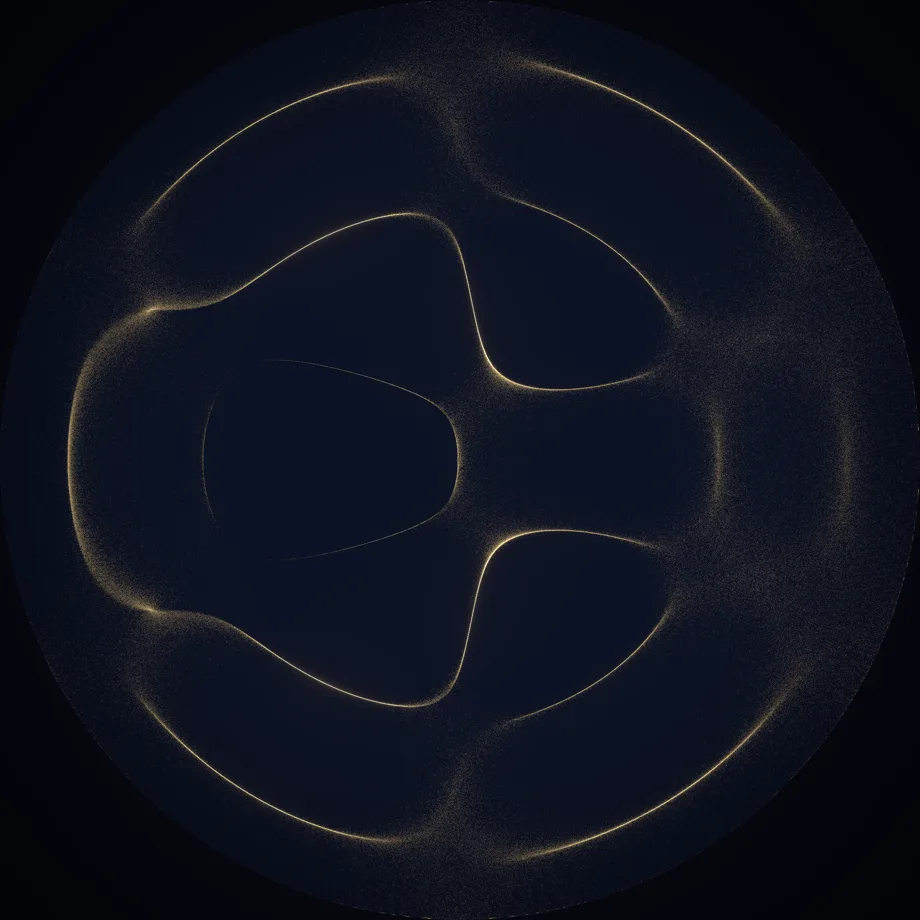
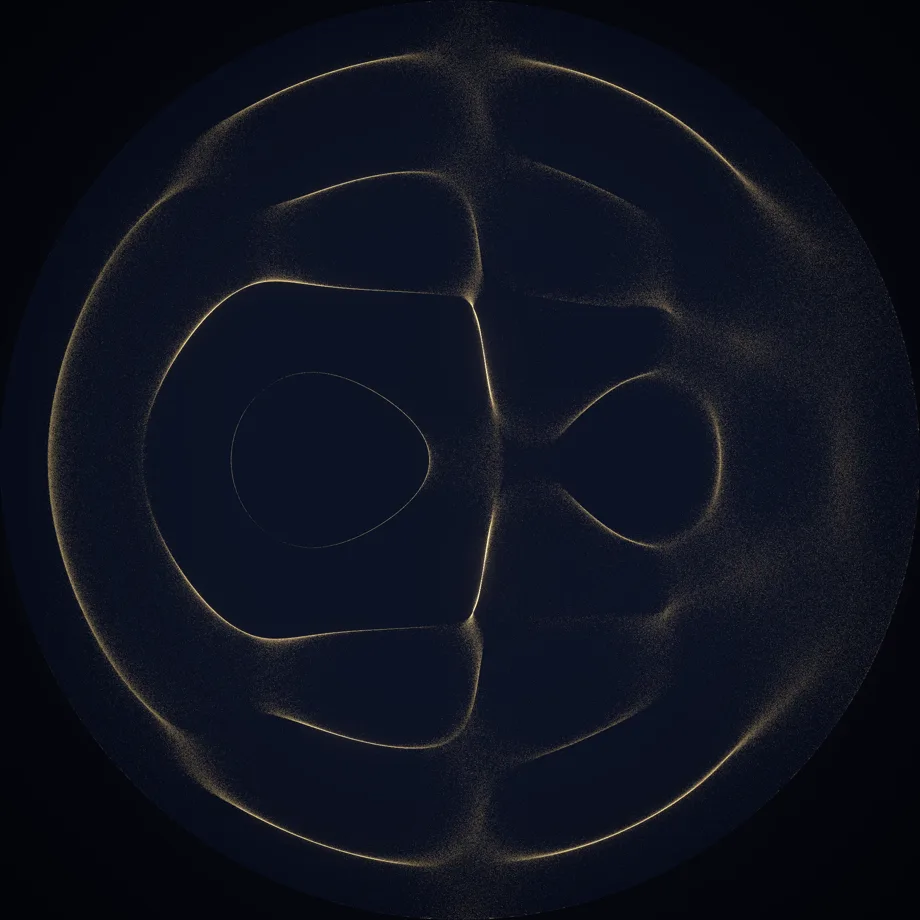
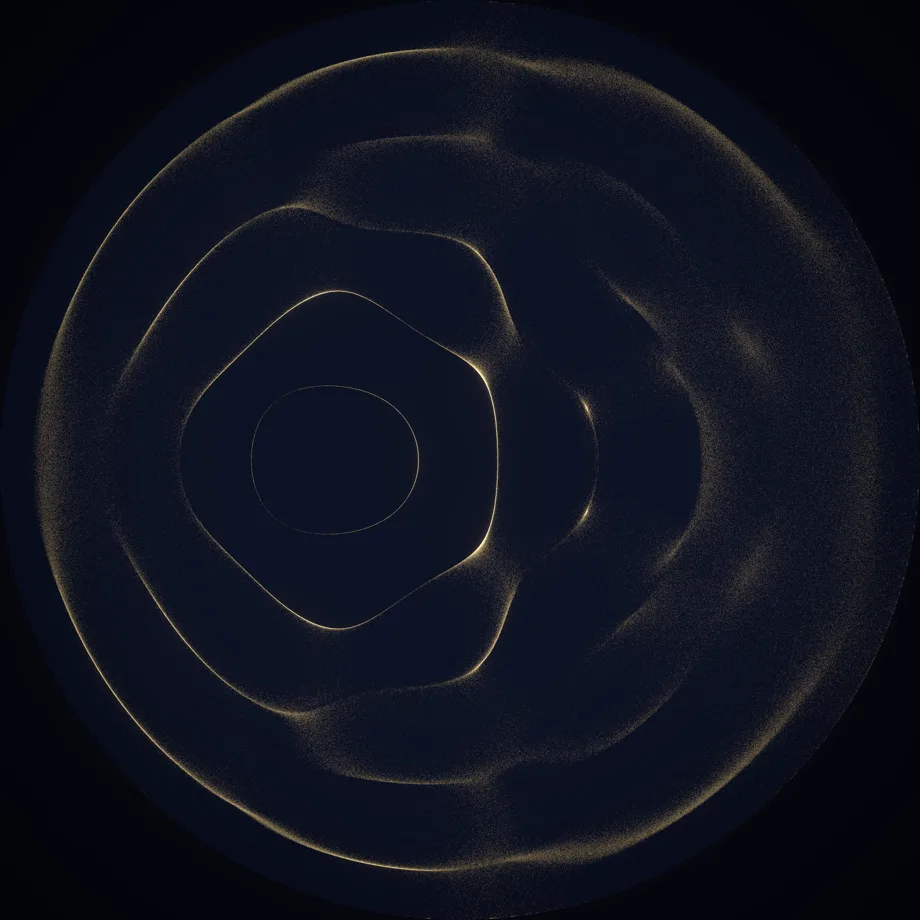
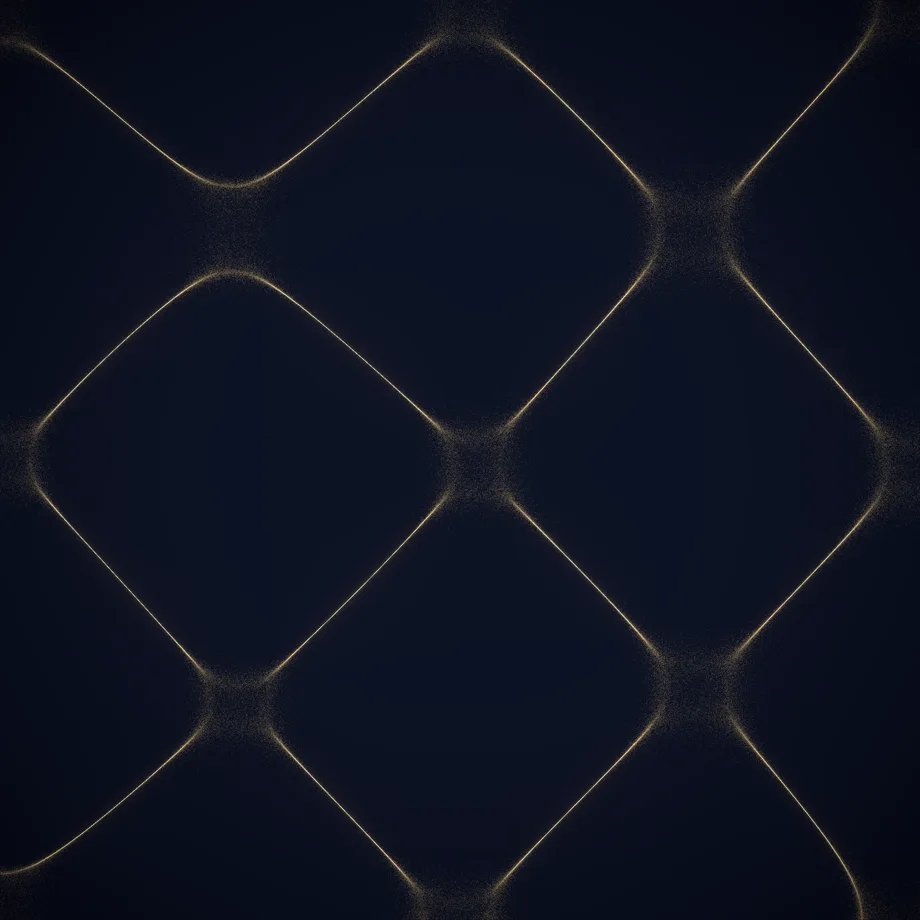
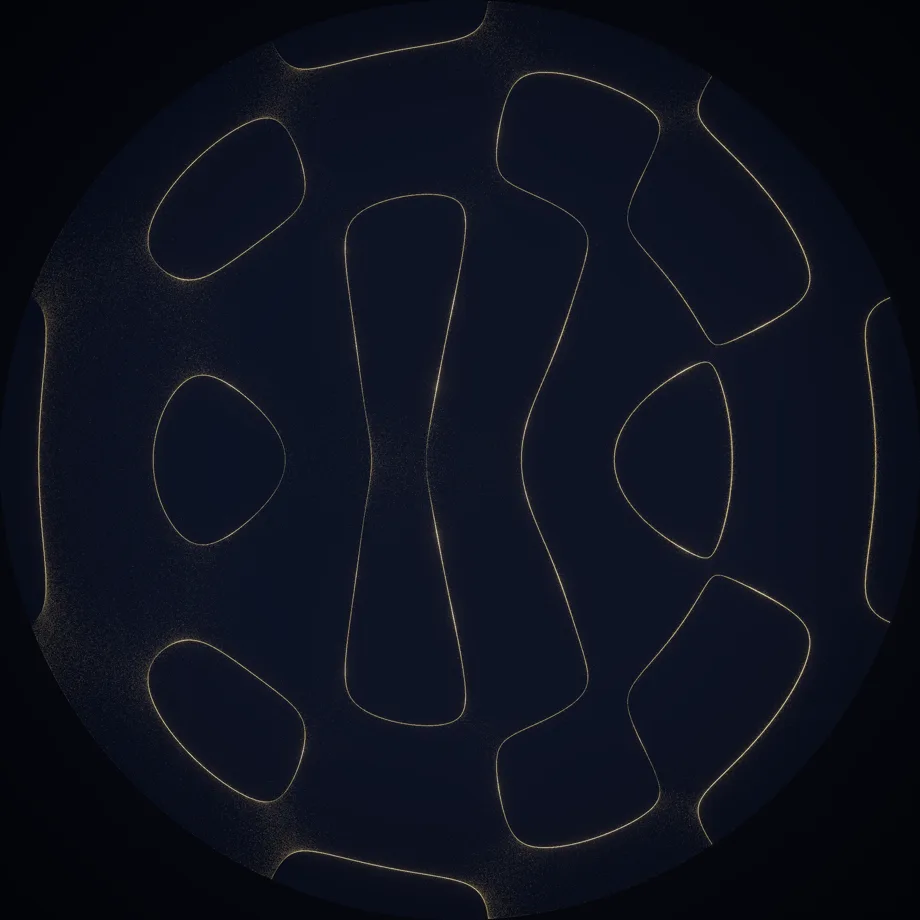
Scatter sand on a metal plate and make it vibrate, and the grains flee the places that move — the antinodes — and gather where the plate stays still: the nodal lines. The plate's eigenmodes appear, drawn not by a formula but by matter organising itself. Ernst Chladni demonstrated this in 1787.
This study drives a plate model across its resonances and lets a cloud of simulated grains settle. Between clean resonances live nameless figures — blends of several modes — and the drive point, set off-centre, decides how symmetric the pattern becomes. The lines you see are simply where the grains stopped moving.
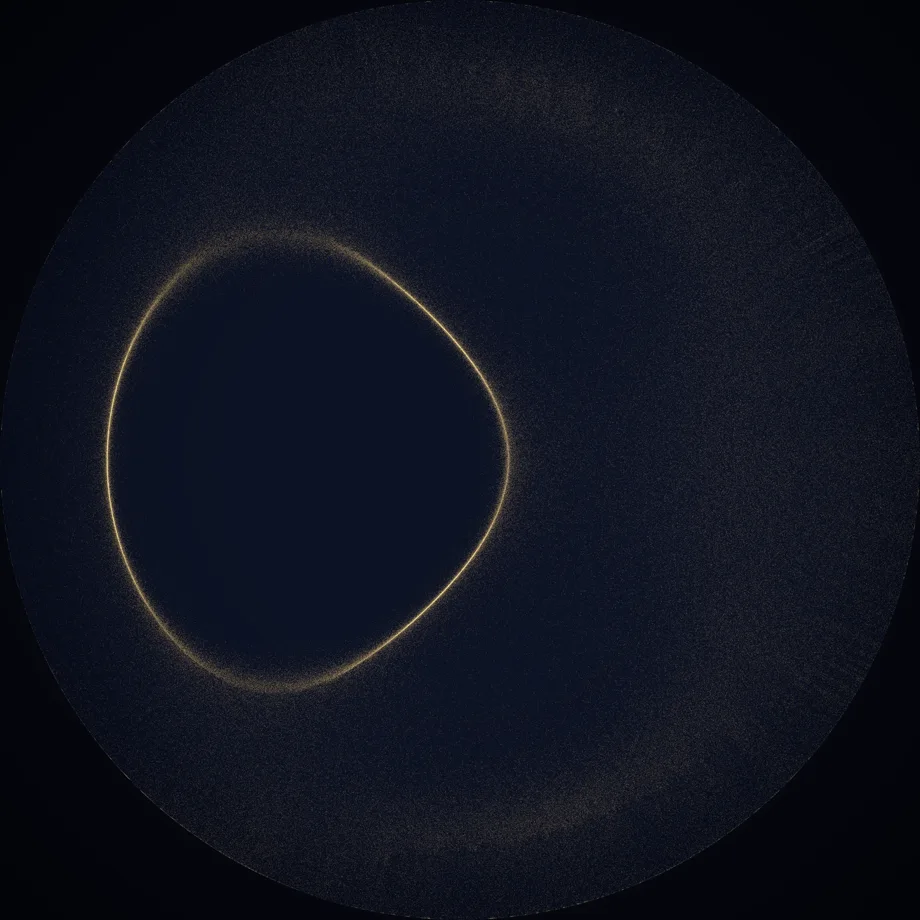
This is not a scientific simulation result, but a visual interpretation of the phenomenon.
PARAMETERS EXPLORED
Each image below records its exact parameter set.
THE MATHEMATICS the model behind the images
Behind the sand: the vibration eigenmodes of a thin plate (the biharmonic ∇⁴ eigenvalue problem). A drive frequency Ω blends the modes; the sand collects where the surface barely moves.
Inspired by plate-vibration eigenmodes; the sand is a self-organising particle process, not an exact modal reconstruction.
SELECTED STILLS — 6
MOTION STUDIES
Chladni figures are made of movement — the sand only settles once the plate stops asking it to move. A few short studies of that settling.
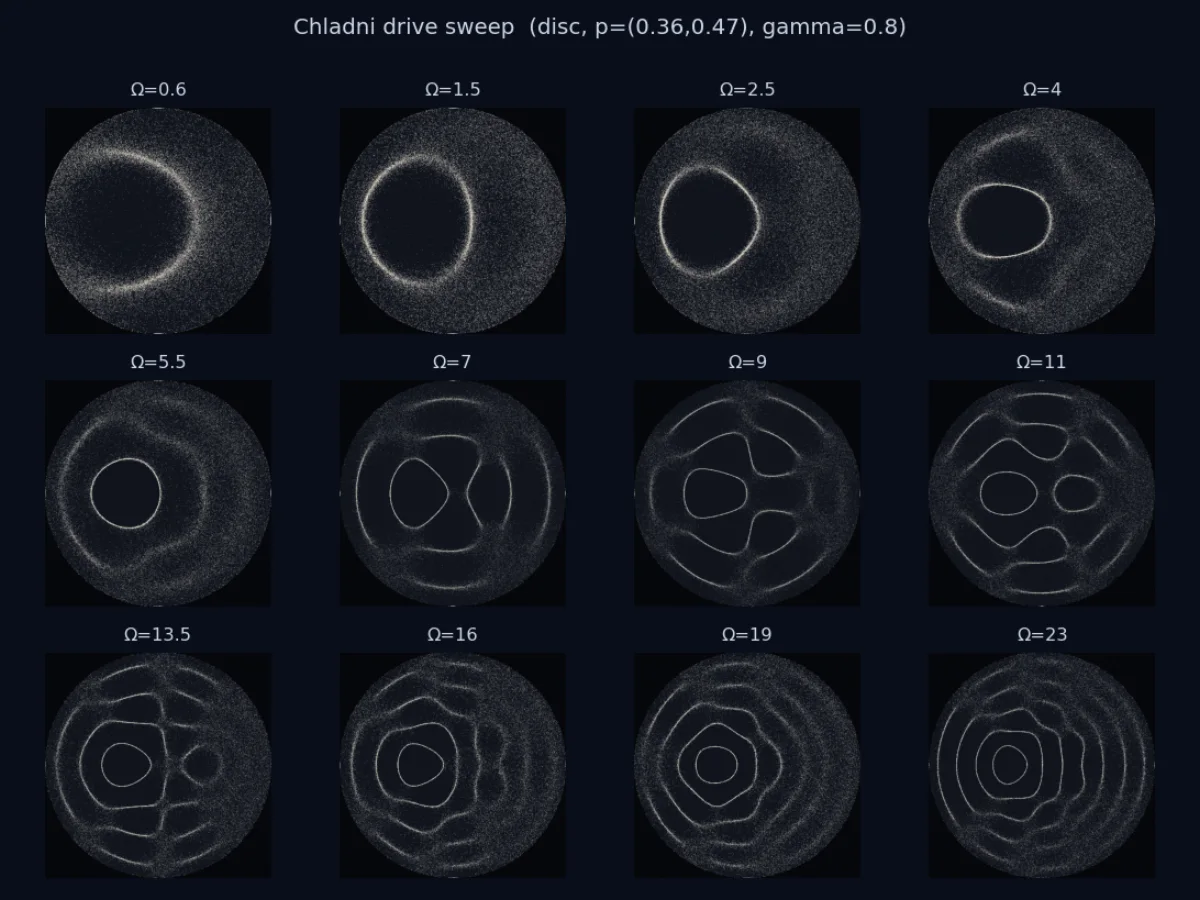
PROCESS — PARAMETER SWEEPS
A tour of the drive frequency on an eccentric disc — the figure tightening from an off-centre eclipse to a ringed mandala as Ω rises.
COLOUR / FORM = REAL PHYSICS
Colour here is grounded the same way as the earlier studies — in the real materials. Classic Chladni is a black steel plate with white quartz sand; the contrast is the figure.
Swap the powder and the figure inverts. Fine, light lycopodium spores are carried by the plate's air currents to the antinodes instead — the same plate and tone yield the negative image (Faraday, 1831). The plate opposite is exactly that: brass with lycopodium, the pollen clouds glowing at the antinodes where quartz sand would leave darkness.
The hero palette — navy plate ⇄ gold sand, weaver — is the house colourway. All colours are artistic choices grounded in real plate-and-powder pairings, not measurements.
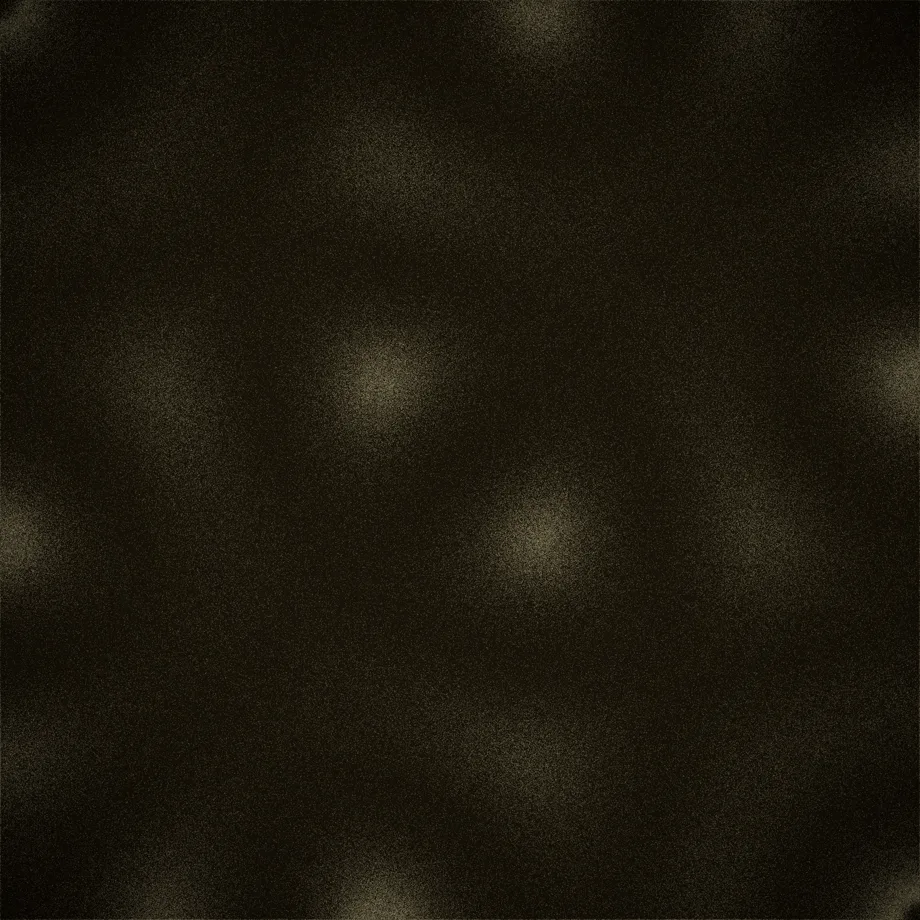
Same standing wave, different powder — nodal sand (quartz) vs antinodal dust (lycopodium).
REFERENCES
- E. F. F. Chladni. "Entdeckungen über die Theorie des Klanges." Weidmanns Erben und Reich, Leipzig (1787).
- W. Ritz. "Theorie der Transversalschwingungen einer quadratischen Platte mit freien Rändern." Annalen der Physik, vol.28, 737-786 (1909).
INTERACTIVE STUDY
A small window into the model behind this study — a deliberately simplified instrument, reduced in resolution, scope, and rendering. The finished works above are something else entirely: hundreds of thousands of simulated grains, settled and graded by hand. Here the standing wave answers instantly — sweep the frequency and watch the figure pass through nameless in-between states.
This interactive study is not intended as a scientifically validated reproduction. It is a visual interpretation generated from an implemented model and curated parameter exploration — and it is a deliberately simplified instrument, separate from the full engine used to author the finished works.